
Suffer the little children
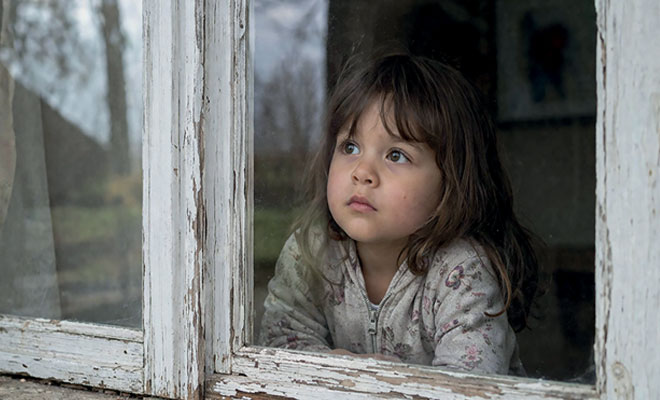

Christ’s sacrifice brings freedom from sin and shame
I grew up in an era when it was taken for granted that life would get better for people. Back in the 1960s and 1970s, there was plenty of poverty and ill health but also a sense that we were on top of it. The welfare state, properly funded, would shape a society that was healthy, educated and aspirational.
And for those who needed a helping hand, there was a system of benefits to alleviate the slings and arrows of outrageous fortune. However, from a 2026 perspective, endless global economic crises and myopic political leadership have resulted in an impression that we are on the road to nowhere.
Indeed, a couple of recent reports involving the Office for National Statistics (ONS) have highlighted the feeling that the collective treadmill is now in reverse.
Biological recession
A report published by the Health Foundation and the ONS, paints a sobering picture of what has been termed the UK’s ‘biological recession’. It highlights a nation where overall life expectancy has largely plateaued, but the quality of those years – specifically Healthy Life Expectancy (HLE) – is in a sharp, historic decline.
The report suggests the average number of years a person can expect to live in ‘good health’ has fallen by approximately two years over the last decade. Nationally, the average man can now expect only 60.7 years of good health, while for women, the figure stands at 60.9 years.
Perhaps the most alarming statistic in the report is that for men in the UK’s most deprived areas, healthy life expectancy has dipped below the age of 50 for the first time on record. This creates a staggering 20-year ‘health gap’ between the nation’s wealthiest and poorest postcodes.
With the UK State Pension age currently at 67, the data suggests that a vast portion of the population will succumb to chronic illness or infirmity nearly two decades before they are eligible to retire. In the most impoverished areas, residents are essentially biologically old by their late 40s.
The Royal College of Physicians and other health bodies have responded to this data by pointing toward the social determinants of health rather than just clinical failures. The report identifies several systemic factors fuelling this decline:
- Housing Quality: Damp, cold, and overcrowded housing contributing to respiratory and chronic conditions.
- Food Insecurity: A ‘broken food system’ making calorie-dense, nutrient-poor diets the only affordable option for millions.
- Economic Inactivity: A surge in adults unable to work due to long-term sickness, which creates a feedback loop of poverty and further ill health.
A turning point for the nation’s children
Another report and more alarming news. Data released by the National Child Mortality Database (NCMD) and the ONS, also reveals a country at a crossroads. For the year ending March 2025, England saw 3,492 child deaths (ages 0 – 17).
While this represents a slight 2% decrease from the previous year, the figures remain stubbornly higher than pre-pandemic levels. Perhaps more tellingly, 2026 is projected to be the first year in over a century where deaths may outnumber births in the UK, a demographic turning point that places the health and survival of every child under a renewed, urgent spotlight.
The most accurate tool for assessing the health of the nation’s children isn’t a stethoscope but a map. The gap between the ‘haves’ and the ‘have-nots’ has widened into a chasm. Children living in the most deprived 20% of neighbourhoods are more than twice as likely to die as those in the least deprived areas.
In the West Midlands, the infant mortality rate sits at a staggering 6.1 deaths per 1,000 live births. Travel south to the more affluent South West, and that number drops to 2.5.
This isn’t just a statistical anomaly; it is a manifestation of what public health experts call the social determinants of health. It is the difference between a home with central heating and one black with damp; between a mother who can afford a nutrient-rich diet and one who is skipping meals to pay the electric bill.

The most dangerous time for a British child remains the first 28 days of life. Neonatal deaths account for roughly 43% of all childhood fatalities. The primary drivers are well-known: premature birth (gestational age under 37 weeks) and congenital anomalies.
However, the risk is not shared equally. Babies of Black or Black British ethnicity face mortality rates more than double those of their White British counterparts.
In 2025, the death rate for Black children was 58.1 per 100,000, compared to 22.7 for White British children. This disparity has sparked a national conversation about institutional bias in maternal healthcare and the need for culturally competent prenatal support.
Family hubs
In response to all this, the government is moving toward a First 1,000 Days strategy. A £100 million investment into perinatal mental health and a £69 million injection into Family Hubs aim to catch families before they fall through the cracks.
The 2024 Autumn Budget’s decision to focus 75% of Family Hub funding on the most deprived local authorities suggests a move toward ‘proportionate universalism’ – providing support for all, but with a scale and intensity proportionate to the level of need.
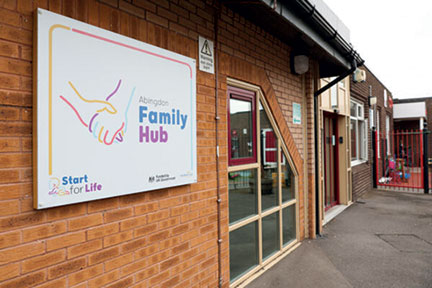
The emergence of Family Hubs represents a shift in philosophy. By integrating midwives, mental health counsellors, and debt advisors under one roof, the goal is to treat the family as a whole ecosystem. In Somerset, a ‘distributed hub’ model uses food banks and village halls to reach rural families who might otherwise be invisible to the system.
Moreover, there is a growing emphasis on father-inclusive training. New initiatives are seeking to involve men more deeply in the health and safety of their newborns, which studies suggest can significantly improve long-term child outcomes.
In the 19th century, the great reformer Fyodor Dostoevsky famously remarked that ‘the soul is healed by being with children.’ In the 21st century, we might add that the health of a nation is measured by how it protects them.
The statistics for 2026 tell a story of incredible medical resilience but social fragility. We can perform heart surgery on a foetus in the womb, yet we struggle to ensure that same child has a mould-free bedroom to return to. The ‘quiet crisis’ of child mortality in the UK is not a medical failure; it is a social one.

It seems to me that Jesus has much to say about children and childhood. Here are just some of his words:
‘Suffer the little children to come unto me, for such is the kingdom of God.’
‘Unless you are born again and become like this little child, you have no part in me.’
‘Woe to them that causes one of these little ones to stumble.’
They are at the centre of his vision for a new kind of social reality, known as the kingdom of God. In this new order, success is measured by the honour bestowed on the weak, marginalised and insignificant. And also the capacity of those in power to learn from those who have been previously denied access to the levers of influence.
These social reports are a wake-up call to us all. What kind of society will our children and grandchildren inherit?
As the nations of the world deal daily with global warfare and economic shocks, Christians are faced with an uncomfortable question: are we investing in the kingdom of inequality and greed or in Jesus’ Kingdom of God? 